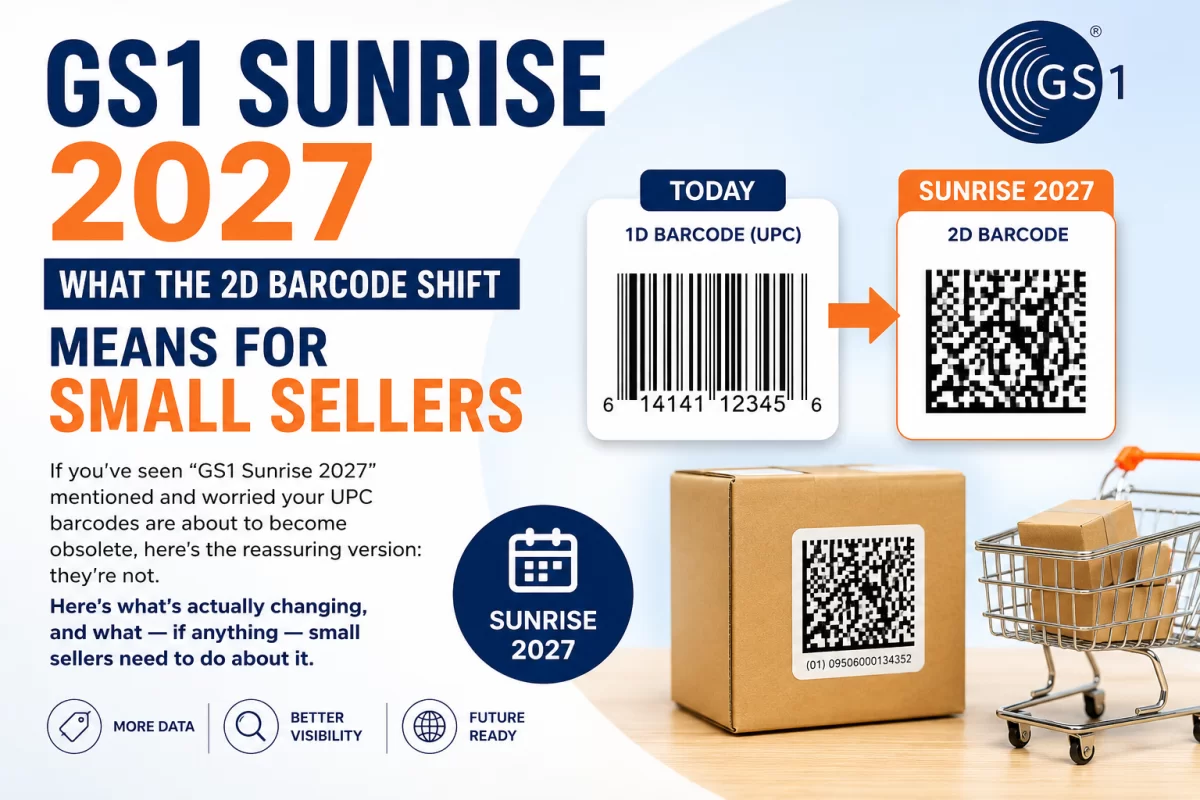
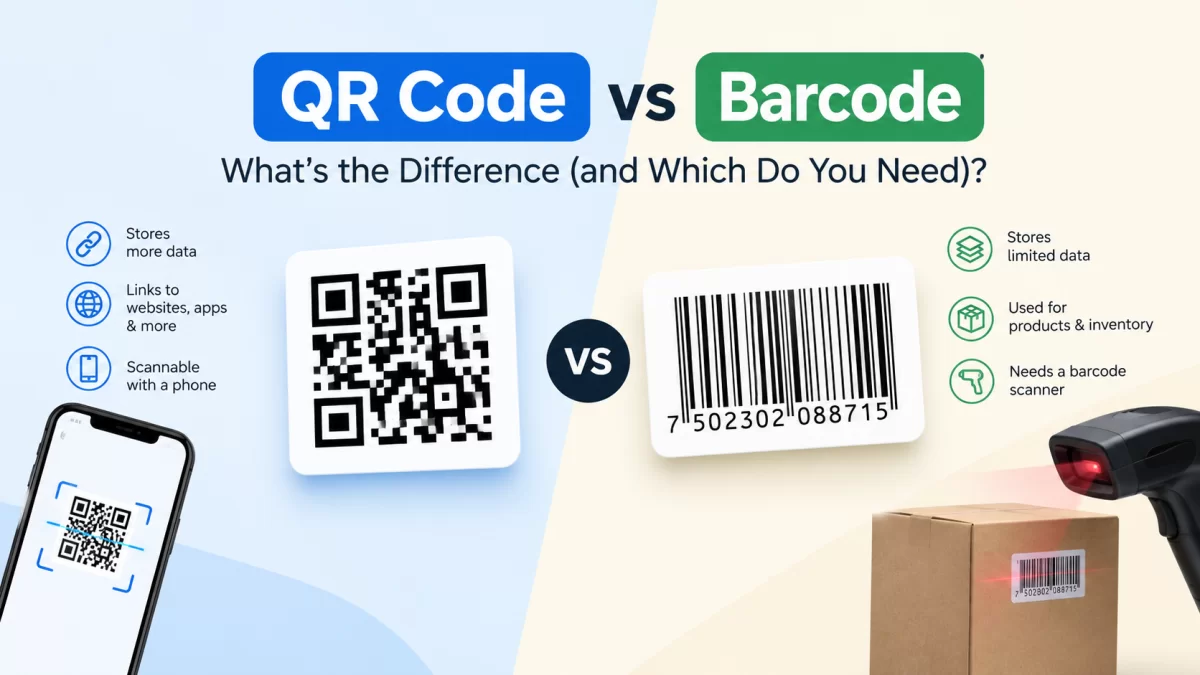
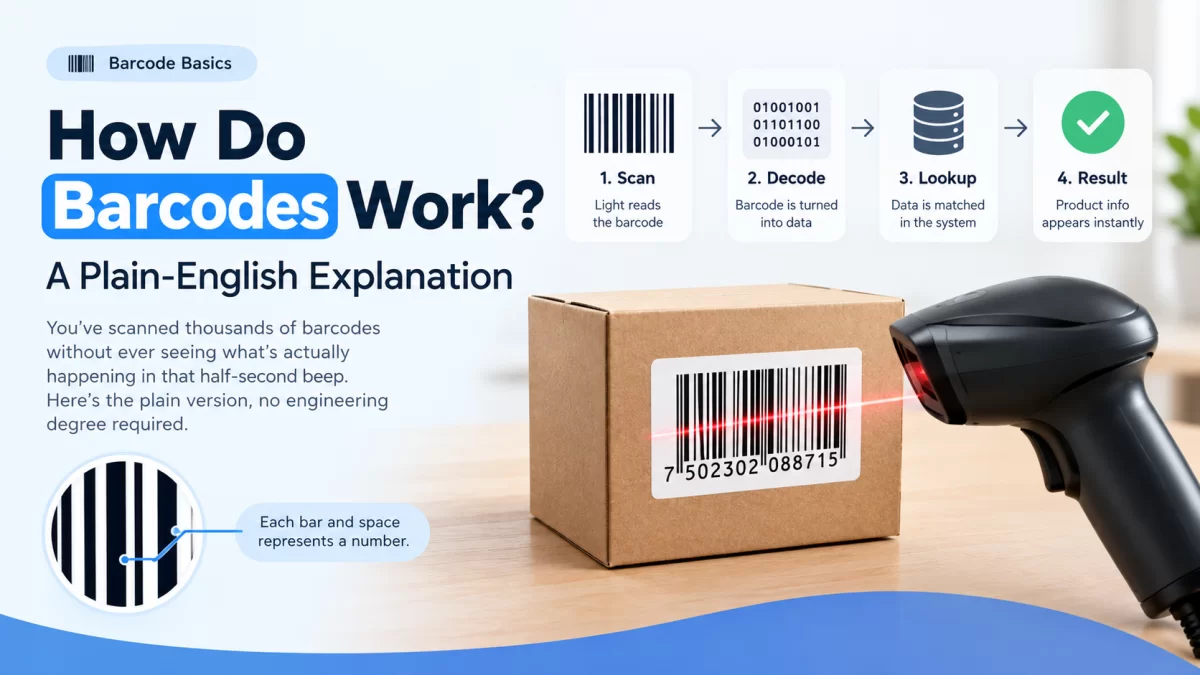
SKU vs UPC: What's the Difference and Why It Matters
SKU and UPC both look like a string of numbers on a product, and sellers mix them up constantly — but they solve two completely different problems. Here's the difference in plain terms, and why using the wrong one causes real inventory headaches.
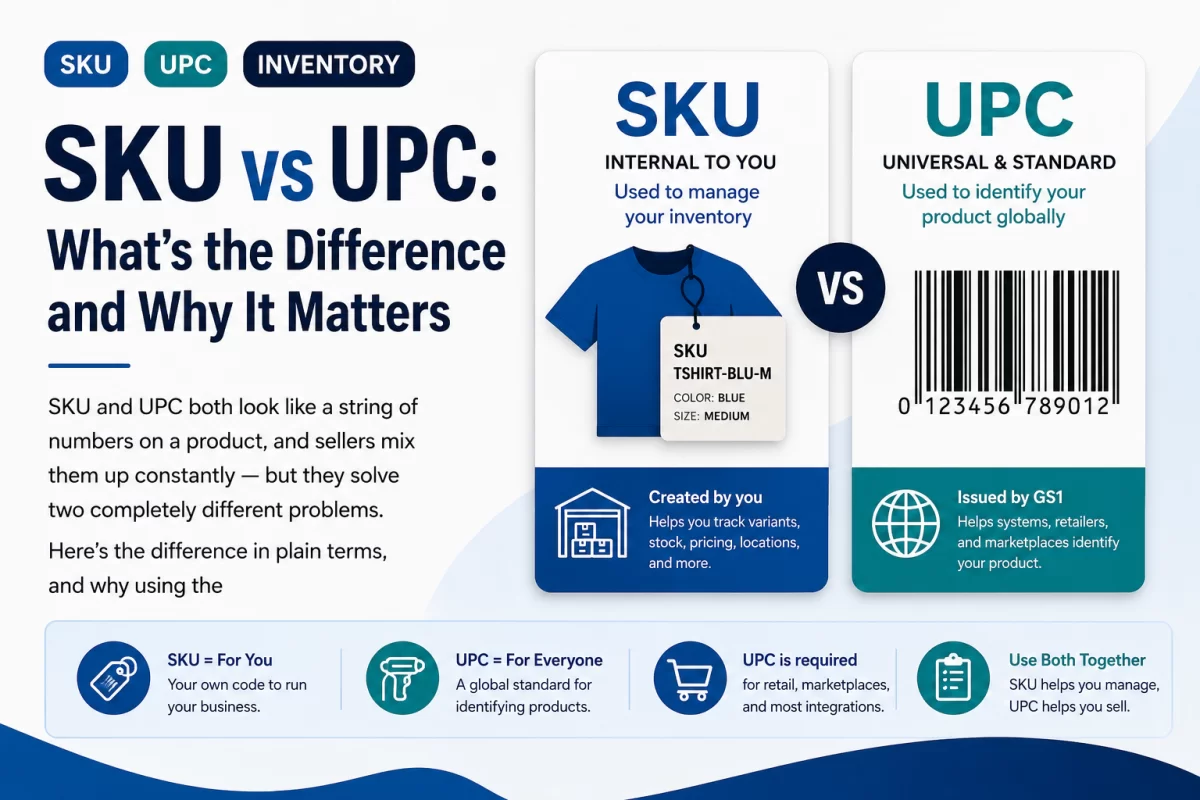
SKU and UPC both look like a string of numbers on a product, and sellers mix them up constantly — but they solve two completely different problems. Here's the difference in plain terms, and why using the wrong one causes real inventory headaches.
The Core Difference
A UPC is a universal identifier issued through GS1. It identifies the product globally — the same UPC works whether the item is sold on Amazon, at Walmart, or in a small boutique. It never changes, and it isn't tied to any one seller.
A SKU (Stock Keeping Unit) is an internal code that you create yourself. It exists only inside your own inventory system, and two different sellers of the exact same product will almost always use two completely different SKUs for it.
A Simple Example
Say you sell a ceramic mug in three colors. The mug has three different UPCs — one per color, since each is a distinct product variant that needs its own universal identifier. But your own SKU system might label them "MUG-BLU," "MUG-RED," and "MUG-GRN" — codes that make sense to you and your warehouse team, but mean nothing to any other retailer.
Why the Difference Actually Matters
- Marketplace listings need a UPC, not a SKU. Amazon, Walmart, and similar platforms require the universal identifier to create or match a listing — your internal SKU has no meaning to them.
- SKUs help you manage your own operations. A well-structured SKU system makes warehouse picking, reordering, and reporting easier, independent of what marketplace you sell through.
- Mixing them up creates listing errors. Entering a SKU into a UPC field (or vice versa) is a common cause of rejected or mismatched product listings.
Do You Need Both?
If you're selling on any major marketplace, yes. You need a UPC per product/variant to create the listing, and you'll likely want your own SKU system regardless, purely to keep your own inventory organized as your catalog grows. The UPC is what the outside world uses to recognize your product; the SKU is what you use to run your business day to day.
Frequently Asked Questions
Can I use my SKU as my UPC?
No. A UPC must be a valid, GS1-registered number — you can't substitute an internal SKU for it on any marketplace that verifies barcodes.
Do I need a UPC if I only sell direct-to-consumer on my own site?
Not strictly, but it becomes necessary the moment you expand to a marketplace or retailer that requires one, so many sellers set it up early to avoid a scramble later.
Can two different sellers have the same SKU for the same product?
Yes, easily — SKUs are internal and have no global uniqueness requirement, unlike UPCs.
Does a UPC ever change?
No. Once assigned to a specific product, a UPC stays fixed for the life of that product. If the product changes meaningfully (new packaging, new size), a new UPC is generally required.
Ready to get your barcode? Buy GS1-certified barcodes here →