How Do Barcodes Work? A Plain-English Explanation
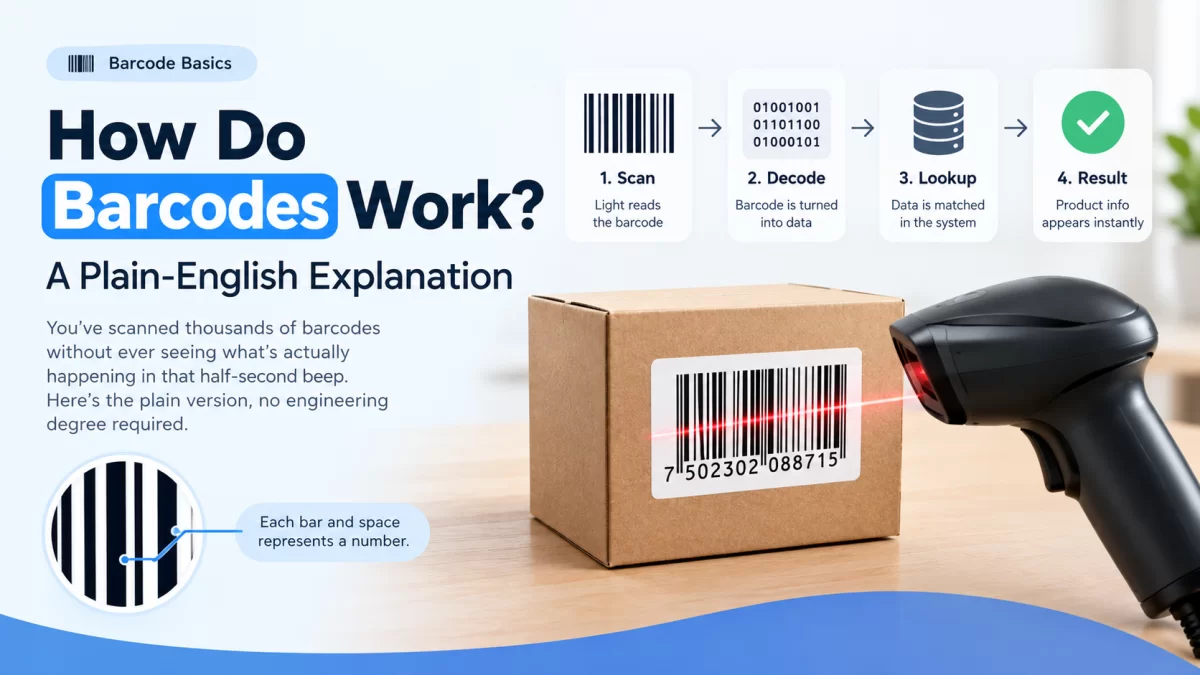
You've scanned thousands of barcodes without ever seeing what's actually happening in that half-second beep. Here's the plain version, no engineering degree required.
You've scanned thousands of barcodes without ever seeing what's actually happening in that half-second beep. Here's the plain version, no engineering degree required.
A Barcode Is Just a Number, Drawn in a Way a Machine Can Read
Underneath the black-and-white lines, a standard UPC or EAN barcode is simply a 12 or 13-digit number. The lines themselves are a visual encoding of that number — each combination of thick and thin bars represents specific digits, arranged in a pattern a scanner is built to recognize.
What Happens When a Scanner Reads It
- A laser or camera-based scanner shines light across the barcode and measures how much light bounces back from the white spaces versus how much is absorbed by the black bars.
- That pattern of light and dark is converted into the underlying digit sequence.
- The scanner sends that number to the connected system — a cash register, inventory database, or marketplace catalog — which looks it up and returns the matching product information: name, price, and stock details.
The barcode itself doesn't "contain" the price or product name directly — it's just the number. The actual product information lives in whatever database the scanner is connected to, which is why the same barcode can show a different price at two different stores.
Why the Last Digit Matters More Than It Looks
The final digit of a UPC or EAN is a check digit, calculated mathematically from all the digits before it. When a scanner reads the code, it runs that same calculation and compares the result to the printed check digit. If they don't match, the scan is rejected — this is what catches smudged, damaged, or mistyped barcodes before they cause a pricing error.
Why This Matters If You're Selling a Product
- Your barcode's underlying number needs to be genuinely unique and properly registered — the visual bars are just a rendering of that number, so a fake or duplicate number will scan just fine but fail marketplace verification.
- Print quality matters because scanners rely on clean contrast between bars and background — low-contrast or blurry printing causes real-world scan failures at checkout or receiving.
- The number stays fixed for the life of the product; changing the packaging significantly generally means a new number is needed, not a new picture of the same number.
Frequently Asked Questions
Does a barcode store the price of a product?
No. The barcode only encodes an identifying number. The price is looked up separately in whichever system the scanner is connected to.
Why do some barcodes fail to scan?
Usually poor print quality, low contrast, damage, or an incorrect check digit — the scanner can't confidently decode the pattern or the math doesn't validate.
Is a QR code read the same way as a UPC barcode?
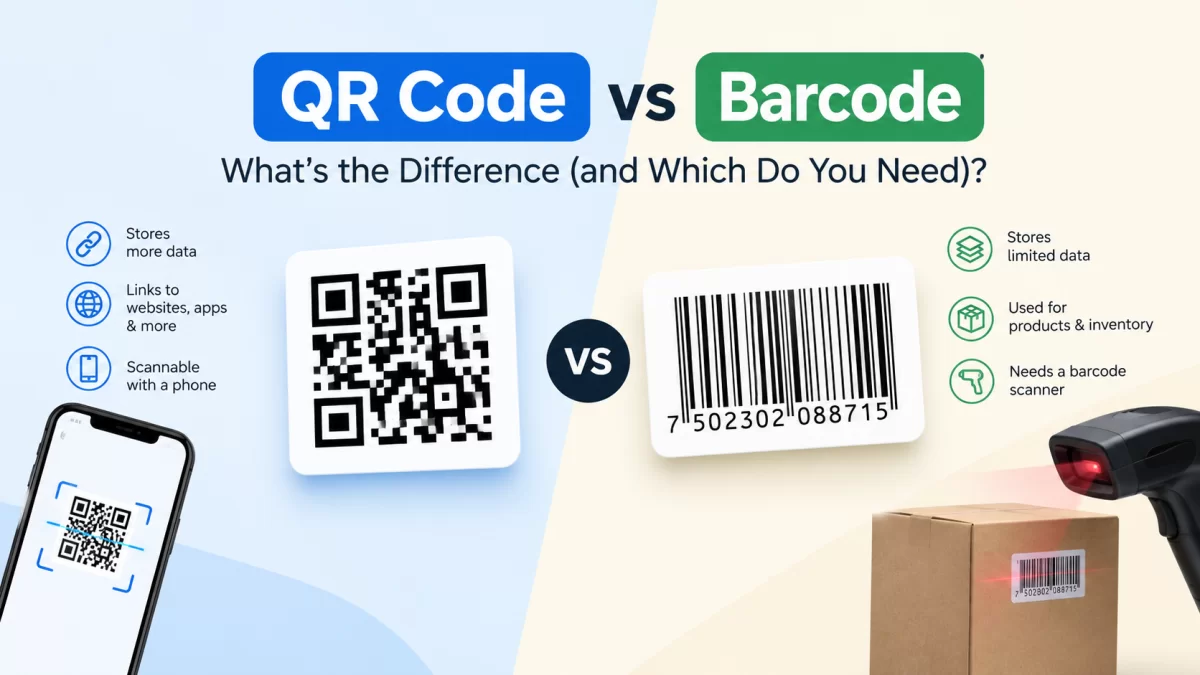
No. A UPC is a 1D (linear) barcode read left to right. A QR code is a 2D barcode read in a grid pattern and can hold far more data than a UPC's simple number.
Can two different products ever share the same barcode number?
They shouldn't — each properly registered UPC/EAN is meant to be globally unique to one specific product.
Ready to get your barcode? Buy GS1-certified barcodes here →