FNSKU vs UPC vs GTIN: What Amazon Sellers Actually Need in 2026
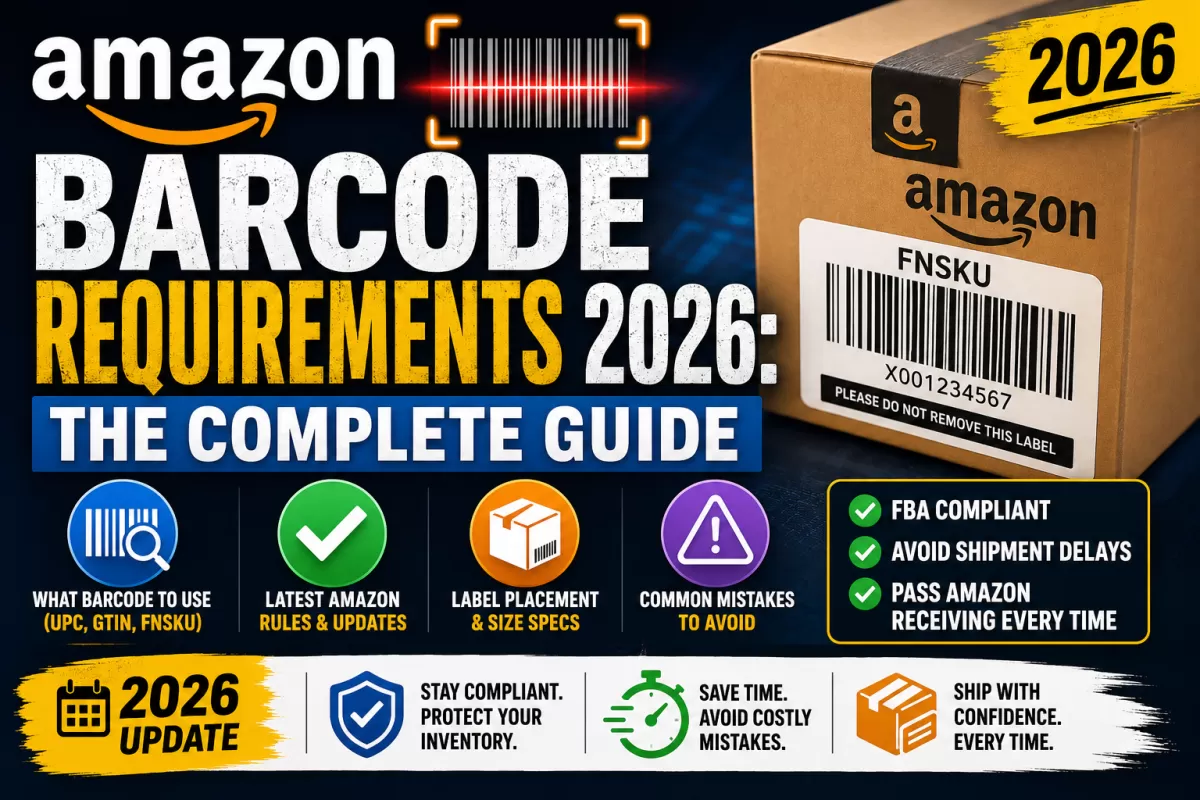
If you've searched "FNSKU vs UPC" and come away more confused than when you started, you're not alone — it's one of the most common questions new Amazon sellers ask, and the confusion got worse after Amazon's March 2026 barcode policy update. Here's the short version, then the full breakdown.
If you've searched "FNSKU vs UPC" and come away more confused than when you started, you're not alone — it's one of the most common questions new Amazon sellers ask, and the confusion got worse after Amazon's March 2026 barcode policy update. Here's the short version, then the full breakdown.
UPC and FNSKU Solve Two Different Problems
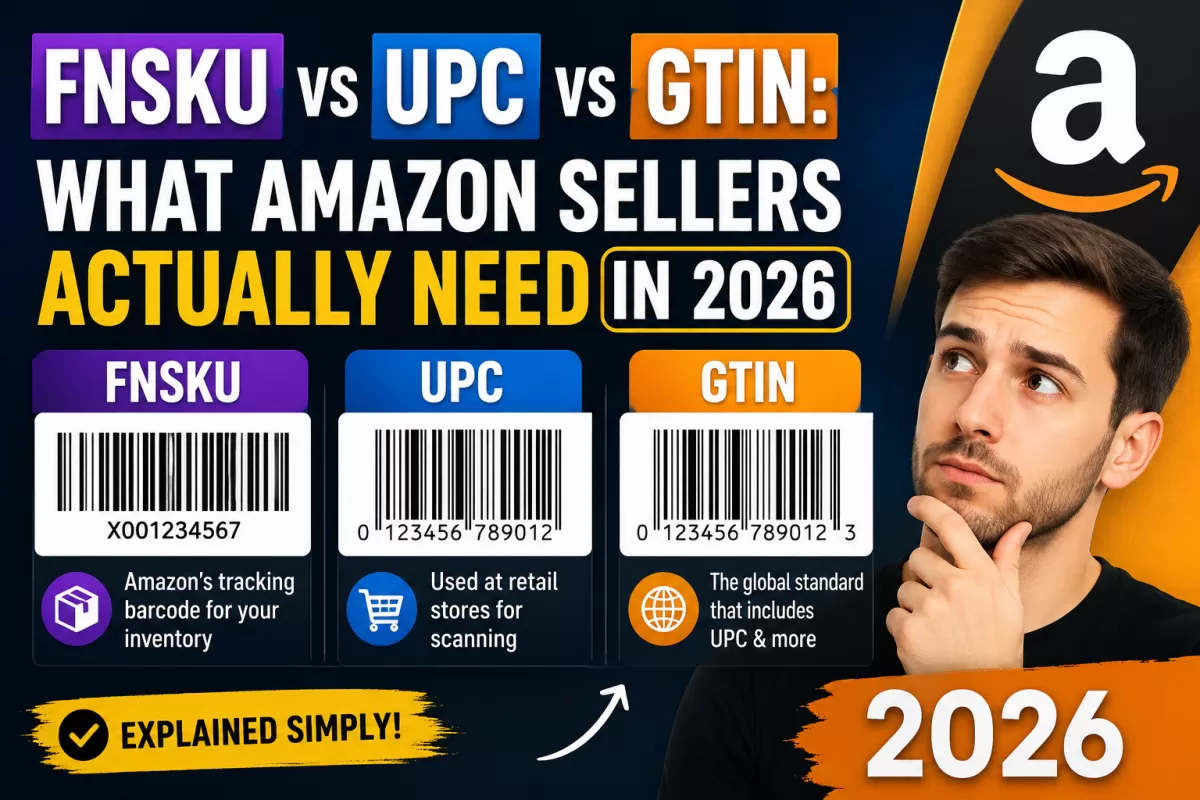
A UPC (or EAN) is a global product identifier issued through GS1. It identifies what the product is — the same UPC works on Amazon, Walmart, eBay, and any retailer worldwide. It belongs to the product, not to you as a seller.
An FNSKU is Amazon-specific. It identifies which seller's unit this is inside an Amazon fulfillment center. Amazon generates it automatically once your listing exists — you don't buy it, you print it. Two sellers can list the exact same product (same UPC) but have completely different FNSKUs, because FNSKU tracks ownership of physical inventory, not the product itself.
In short: UPC gets your product into the Amazon catalog. FNSKU tracks your specific stock once it's inside Amazon's warehouses.
Do You Need a UPC, an FNSKU, or Both?
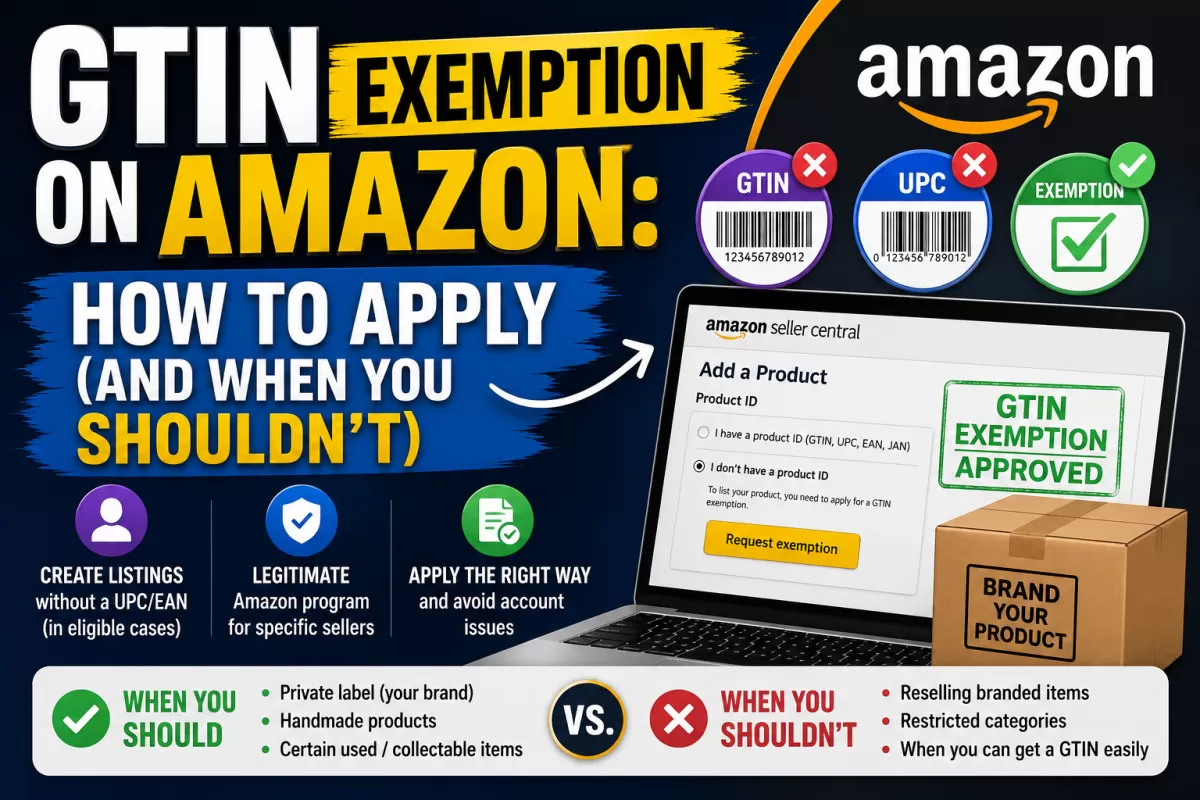
- Creating a brand-new listing: you need a UPC or EAN (unless you qualify for a GTIN exemption).
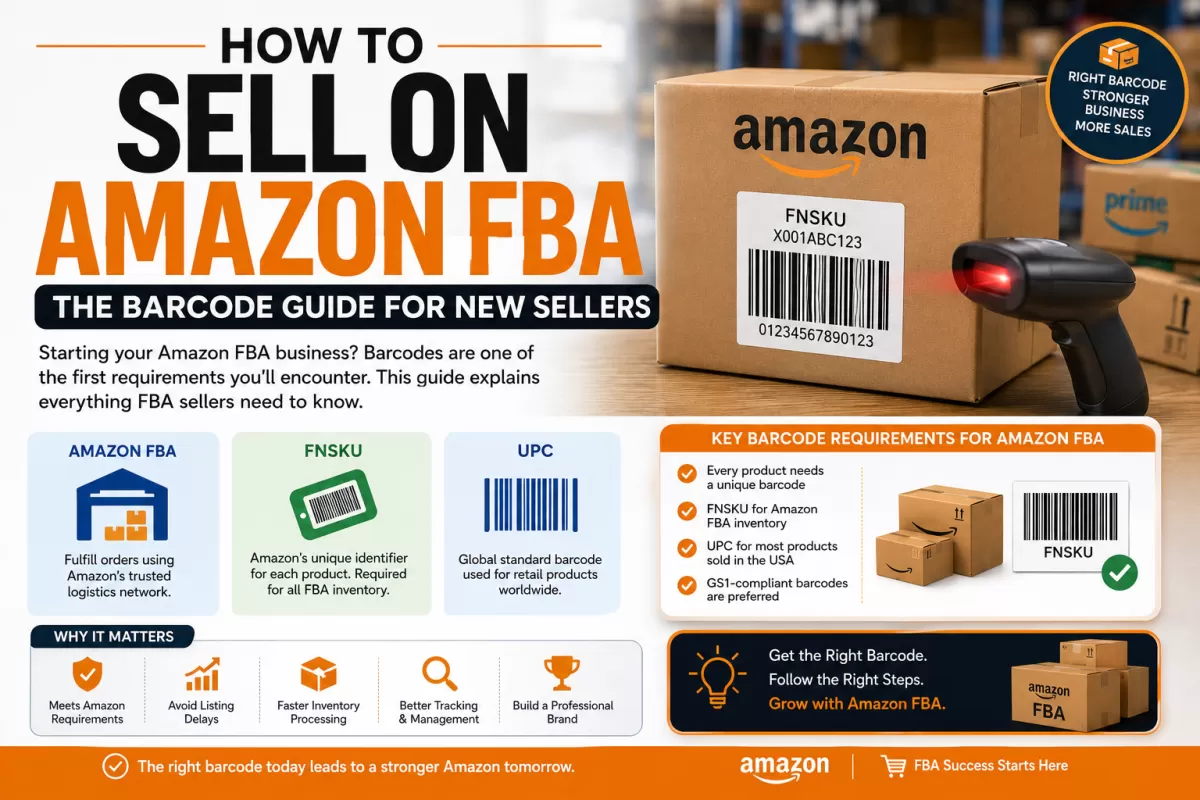
- Shipping inventory to FBA: you need an FNSKU label on each unit, unless you've selected "Merchant barcode" in Seller Central and Amazon allows commingling for that listing.
- Private label sellers: almost always need both — a UPC to create the listing, and an FNSKU once units enter Amazon's network, so your stock stays separated from anyone else who might list against the same catalog page.
What Changed With Amazon's March 31, 2026 Barcode Rule
Amazon tightened enforcement so that resellers of existing branded products can no longer rely on the manufacturer's printed barcode the way many previously did — Amazon barcodes (FNSKU) became mandatory in more categories for non-brand-owner sellers shipping to FBA. Brand owners enrolled in Brand Registry can still use manufacturer barcodes on eligible listings, but everyone else needs to plan for FNSKU labeling as the default, not the exception.
If you've been shipping in with only a manufacturer UPC visible and no FNSKU, it's worth re-checking your current barcode setting in Seller Central before your next shipment — a mismatch here is one of the most common causes of receiving delays right now.
How to Get Compliant Without the Guesswork
- Buy a GS1-certified UPC or EAN for each unique product/variant before creating the listing.
- Once the listing exists, check your barcode setting in Seller Central (Manage Inventory → Edit → Fulfillment).
- If FNSKU is required, print the labels Amazon generates and apply them over or alongside the manufacturer barcode per your product type's placement rules.
- Never reuse one UPC across different variants (size, color, bundle) — each needs its own.
Frequently Asked Questions
Can I use my manufacturer's UPC instead of buying my own?
Only if you're the brand owner and enrolled in Brand Registry, or your manufacturer directly assigns you rights to their GS1 prefix. Third-party resellers listing against an existing catalog page should use the existing listing's identifiers, not buy a new UPC.
Do I need a new FNSKU for every shipment?
No. Your FNSKU is tied to the seller + ASIN combination, not the shipment. The same FNSKU applies to every unit of that product you send in, until you change your barcode setting.
What happens if I ship units without the correct barcode?
Amazon fulfillment centers may reject the shipment or delay receiving until it's corrected, which pushes back your listing's availability and can affect inventory performance metrics.
Is a GTIN the same thing as a UPC?
GTIN is the umbrella term. UPC (12-digit) and EAN-13 are both types of GTIN — Amazon uses "GTIN" and "UPC" somewhat interchangeably in seller documentation, which adds to the confusion.
Ready to get your barcode? Buy GS1-certified barcodes here →