Do You Need a Barcode for Your Coffee Shop or Bagged Coffee Business?
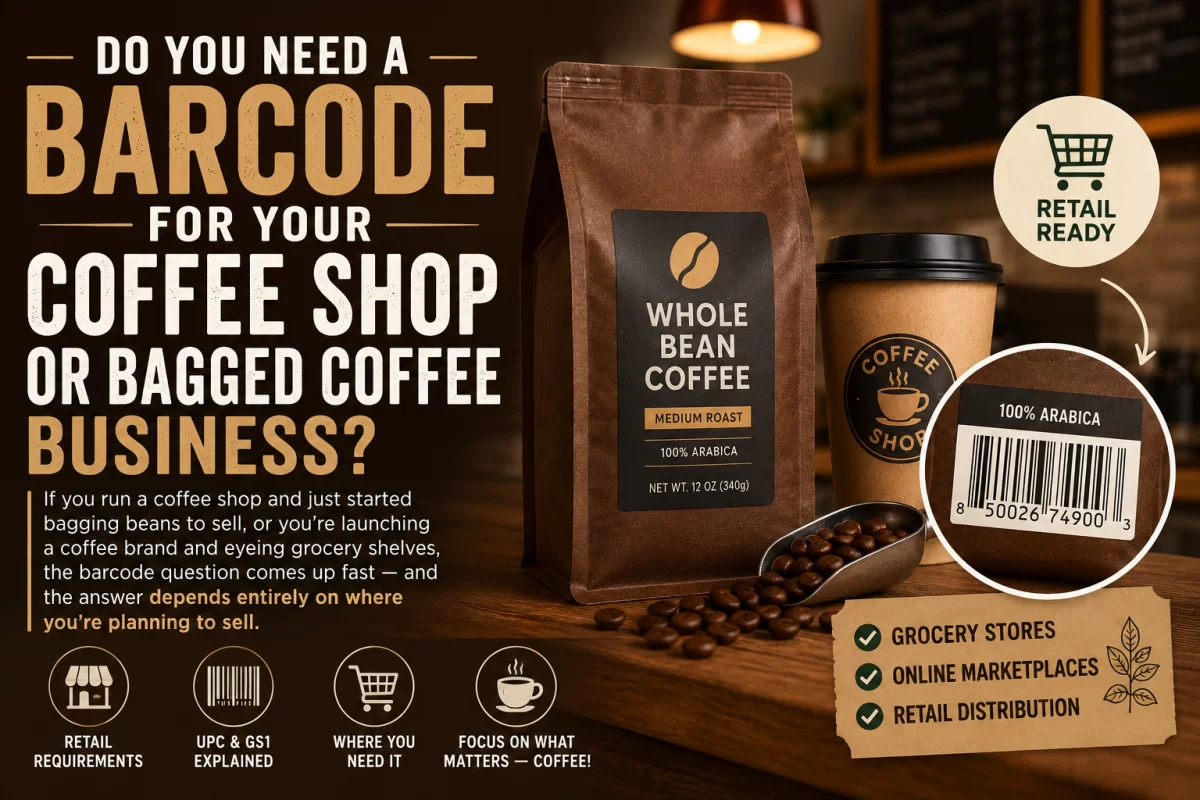
If you run a coffee shop and just started bagging beans to sell, or you're launching a coffee brand and eyeing grocery shelves, the barcode question comes up fast — and the answer depends entirely on where you're planning to sell.
If you run a coffee shop and just started bagging beans to sell, or you're launching a coffee brand and eyeing grocery shelves, the barcode question comes up fast — and the answer depends entirely on where you're planning to sell.
Selling Only Drinks In-House? You Don't Need One
If your coffee shop's only product is drinks made and sold on-site — lattes, drip coffee, pastries prepared in-house — you don't need a barcode. Your POS system handles those sales with its own internal item codes, and no external barcode standard applies.
The Moment You Start Bagging Beans to Sell, That Changes
Once you package coffee — whole bean, ground, or pods — for retail sale, whether that's on your own counter, at a farmers market, online, or through a local grocery store, you're now selling a packaged retail product. That's where a real UPC or EAN barcode becomes relevant, the same as any packaged food product on a shelf.
Why Roasters Specifically Need to Get This Right
- Every roast and size needs its own code. A 12oz bag of your medium roast and a 12oz bag of your dark roast are two different products — each needs a separate UPC, even though they're "the same coffee business."
- Bag size changes require a new code too. Your 12oz and 5lb bags of the identical roast are different SKUs and need different barcodes.
- Grocery and specialty retailers expect a scannable barcode before they'll even consider stocking you. Most retail buyers won't take a wholesale meeting seriously without one already in place.
QR Codes Are Not a Substitute for a UPC
Many specialty roasters print QR codes on their bags for origin stories, brewing instructions, or sustainability information — that's a great marketing tool, but it's a completely separate thing from a retail barcode. A QR code tells a customer's phone where to browse; a UPC tells a cash register or inventory system what product this is and what it costs. You may end up using both on the same bag for different purposes, but one doesn't replace the other.
How to Set Up Barcodes for a Small Coffee Business
- List out every distinct product: each roast × each bag size × any special editions or seasonal releases.
- Buy one GS1-certified UPC or EAN per item on that list.
- Add the barcode to your bag design in the correct size and placement so it scans cleanly at checkout.
- Keep a simple spreadsheet mapping each barcode to its product — coffee catalogs grow quickly once you add seasonal roasts.
Frequently Asked Questions
Do I need a barcode to sell coffee at a farmers market?
Not legally required in most cases, but many market vendors and POS systems still benefit from one, and you'll need it the moment you want to sell into a store.
Can I use the same barcode for my whole bean and ground version of the same roast?
No — whole bean and ground are different products, each needs its own barcode even if it's the identical coffee.
Does Amazon require a barcode to sell packaged coffee?
Yes, packaged coffee sold on Amazon needs a valid UPC/EAN like any other physical product listing.
What's the difference between a QR code and a barcode on a coffee bag?
A QR code links to digital content like your brand story; a UPC/EAN identifies the product itself for retail scanning and inventory. They serve different purposes and often appear together.
Ready to get your barcode? Buy GS1-certified barcodes here →